The Challenge
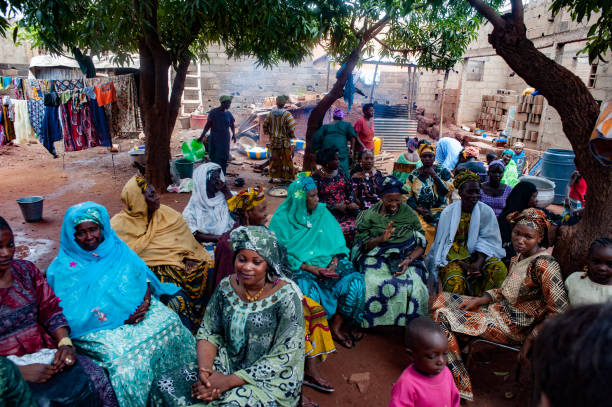
Rural communities face limited access to credit, savings, and insurance due to lack of collateral, limited financial literacy, and distant formal institutions — trapping them in poverty, high-interest loans, and vulnerability to shocks.
Our Solution
Self-sustaining financial platforms where community members pool resources, support each other financially and socially, and foster unity and collective empowerment.
Our Approach
We facilitate, guide, and connect — building local capacity, fostering community-led solutions, and providing tailored support.
Mobilization: Identifying and engaging communities, forming groups, raising awareness.
Training: Equipping members with skills on savings, loans, governance, and financial management.
Group Formation: Supporting establishment of structures, roles, and operating rules.
Capacity Building: Ongoing training, monitoring, and support for leadership and management.
Linkages: Facilitating connections to formal financial services, markets, and local government schemes.
Monitoring: Tracking progress, offering feedback, and addressing challenges.
Sustainability Planning: Supporting long-term plans for self-reliance, including transition to Cooperatives, Associations, or Federations.
Features
Community-led: Managed and owned by members
Saving-driven: Regular savings building a fund for loans and collective security
Flexible Loans: Collateral-free, reasonable rates, tailored repayment terms
Solidarity & Support: Social cohesion and mutual aid
Financial Literacy: Training empowers effective financial management
Autonomous: Minimal external dependency
Scalable & Adaptable: Fits community needs and can expand
Low Operational Costs: Volunteer leadership and local meetings
Regular Meetings: Accountability, transparency, and social bonding
Share-out Cycles: Periodic distribution of profits or surplus funds
Women & Youth Focus: Enhances financial autonomy and social standing
Graduation Pathways: Transition to larger ventures like Cooperatives or Associations
Transformations
Opportunities: Turning small ideas into viable businesses
Livelihoods: Breaking cycles of poverty
Communities: Sparking local economic growth, resilience, and jobs
Mindsets: Empowering long-term investment and bigger dreams
Social Norms: Women lead groups, manage finances, and make decisions; members build solidarity
MSHIKAMANO Toolkit
Group Formation
- •Definition of group goals and objectives
- •Election of leaders and committees
- •Establishment of financial terms (savings, loans, others)
Financial Management
- •Savings mobilization
- •Loan management
- •Financial planning, recording, and reporting
Leadership & Governance
- •Roles and responsibilities
- •Meeting management
- •Transparency and accountability
Conflict & Group Dynamism Management
- •Conflict identification
- •Conflict resolution procedures
- •Peace building
Group Growth Management
- •Goal setting
- •Assessment of capacity and readiness
- •Phased implementation approaches
- •Fostering partnerships and linkages
- •Strengthening governance and systems
- •Sustaining long-term growth
Change Management
- •Management of change resistance
- •Building buy-in and ownership
- •Monitoring and evaluating change
Gender Equality
Economic Empowerment: Women gain access to savings, credit, and financial decision-making.
Social Capital & Voice: Meetings build networks, confidence, leadership skills, and collective voice.
Financial Autonomy: Control over cash enables investment in income-generating activities.
Decision-making Shift: Joint or women-led activity shifts intra-household dynamics toward equity.
Safety Net: Group savings reduce vulnerability and reliance on harmful coping strategies.
Information & Capacity: Venue for financial literacy, business skills, health, rights, and gender-awareness training.
Norms via Role Modeling: Visible women leaders challenge stereotypes and normalize women's public roles.
Why It Matters
MSHIKAMANO Groups put financial power in the hands of the ultra-poor, last-mile communities, and marginalized groups — unchaining rural communities from poverty through economic resilience and solidarity.
Want to Support This Program?
Partner with us to expand this initiative and create lasting change in Kagera Region.
Get In Touch